
Reviewed · SNOWSHOEING & WINTER HIKES
Explore Winter Woods: Snowshoe walk with local Biologist
The best part of this Inari outing is its quiet, close look at ancient Lapland forest. You walk among old trees, frozen lakes, and snowy mires while Terhi or Arto explains the plants, wildlife, and daily skills that shape life here. This is not a race through the woods. It is a patient introduction to the Arctic.
I like the small maximum of six people, which gives you room to ask questions and move at a sensible pace. I also like the warm finish in a kota, with a fire, hot coffee or tea, and local food. The main consideration is that wildlife sightings are never promised, and at about two and a half hours, this is a compact outing rather than a full-day wilderness trip.
Key points at a glance
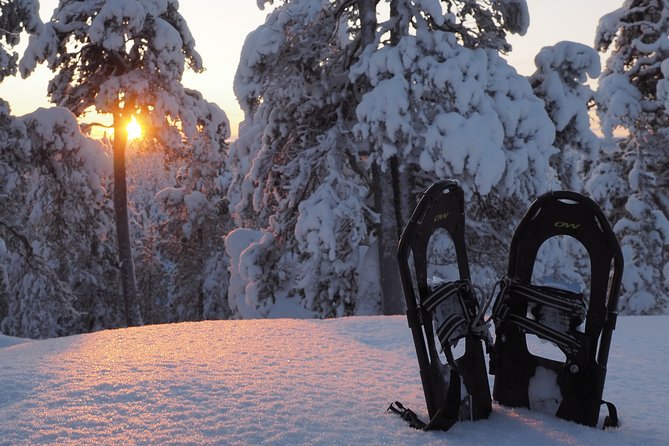
- Ancient forest setting: Walk through some of the oldest woods in Lapland, with lakes and snowy mires along the route.
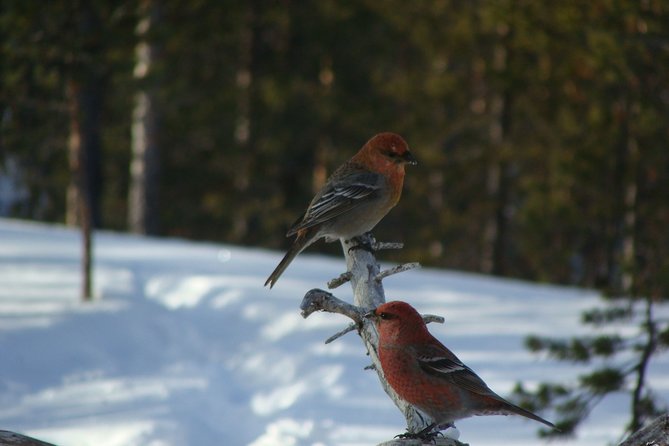
- Real nature interpretation: Learn to read fox, hare, and other animal tracks, and watch for Siberian Jays, Siberian Tits, elk, and Pine Grosbeaks.
- Small-group format: The maximum group size is six, making conversation with Terhi or Arto much easier.
- Fire-hut finale: Finish inside a traditional kota with a hot drink, homemade-style snacks, and the chance to watch birds nearby.
- Good family judgment needed: An 11-year-old has enjoyed the outing, but very young children may find the quiet pace and nature talk demanding.
- Simple timing: Meet at 10:00 a.m. at Terstontie 123 near Inari for an experience lasting about two and a half hours.
A quiet start in the Inari woods
This experience begins at 10:00 a.m. at Terstontie 123, 99870 Inari. The outing ends back at the same meeting point, so plan your day around getting there rather than assuming hotel transport is included.
The opening conversation matters. Terhi and Arto do not simply hand you snowshoes and point toward the trees. They introduce their home, their way of life, and the practical bushcraft skills that remain useful in Arctic conditions. That gives the walk a human setting before you head into the forest.
The experience is run by Terhi and Arto of AT Nature. The information provided describes both as nature-focused hosts, with Terhi often leading the nature interpretation and Arto also guiding walks and explaining Arctic life. Their English is described as excellent, which is useful when the subject turns to small details such as tracks, tree species, vegetation, or seasonal change.
I would treat this introduction as part of the main attraction, not as filler. In Lapland, the forest is not just scenery. It supplies food, fuel, shelter, stories, and clues about the animals around you. Understanding that connection helps you see more during the rest of your stay.
More walking in the snow around Lapland:
- Scenic Snowshoeing on the Top of Pyhä Fell
★ 5.0 · 10 reviews - Premium Snowshoeing in Pyhä-Luosto National Park
★ 4.5 · 6 reviews - Private Northern Lights Tour With Skis Or Snowshoes in Pyhä
★ 5.0 · 4 reviews
Snowshoes, old trees, and frozen mires
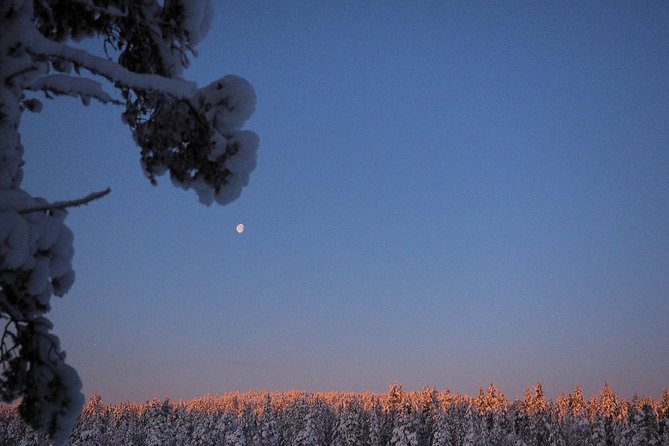
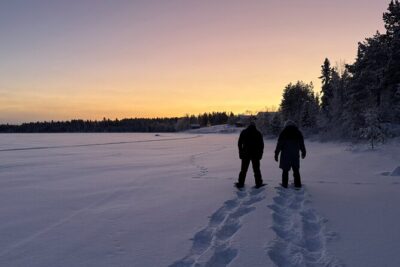
Once fitted out, you enter the woods on snowshoes. The route passes through ancient forest, near lakes and what are described as mystic mires. In winter, snow smooths out the ground and muffles sound, so the experience is likely to feel calm and spacious even though you are close to Inari.
The walk is built around observation rather than speed. You may stop to look at a track, identify a tree, discuss a plant, or watch movement near a feeding area. That slower pace suits the setting. Snowshoeing can be tiring, but this is not presented as a strenuous endurance hike.
The forest is said to be among the oldest in Lapland. That does not mean every tree will be ancient or that you will see a dramatic stand of giant trunks. It means the area offers a chance to consider a long-established northern woodland, with its mix of trees, snow, animal routes, and wetlands.
You should be ready for uneven winter footing. Snowshoes help spread your weight over deep snow, but walking in them still takes a little practice. The tour lasts around two and a half hours, so you need enough comfort and stamina for a sustained outdoor walk. Most people can participate, and service animals are allowed, but the quiet, nature-focused format may not suit very young children.
Reading tracks instead of chasing animals
The wildlife portion is best understood as a lesson in signs. You may not see an elk or mountain hare, but you can still learn how to recognize where animals have passed. One of the most useful skills shared on the walk is identifying tracks, including those of red fox and hare.
That small change in attention can improve the rest of your time in Finnish Lapland. Once you know what to look for, a trail through the snow becomes more than a white path. You begin noticing the marks of movement, feeding, and shelter.
Birdlife is another focus. Siberian Jays and Siberian Tits are commonly seen around the area, especially near feeding places. The finish by the fire also gives you time to watch birds without trying to follow them through the forest.
Timing can affect what you see. By mid-February or early March, the guides begin looking for the return of Pine Grosbeaks. That does not guarantee a sighting, but it shows how closely the outing follows the seasons. The chance of seeing an elk, mountain hare, or Pine Grosbeak adds interest, while the guides’ interpretation gives the walk value even when animals remain out of sight.
This is an important point for setting expectations. You should book this for the chance to understand Arctic nature, not for a guaranteed wildlife encounter. Snow, weather, and animal behavior are beyond anyone’s control. Some conditions may make tracks hard to see, yet the forest itself remains the subject.
What the nature talk adds
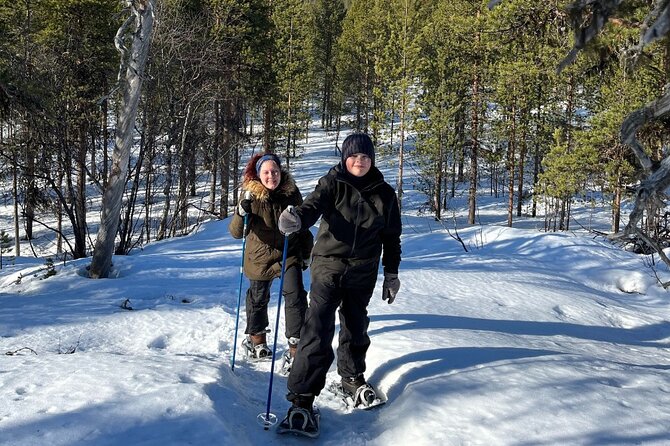
The strongest part of the outing is the explanation around what you see. Terhi’s teaching covers local flora and fauna, including trees, plants, and vegetation. The conversation can also touch on Arctic animals, life in northern Finland, Sami culture, and the effects of climate change.
That range makes the walk useful early in a Lapland holiday. If you schedule it near the beginning of your stay, you gain a better frame for later time outdoors. You may recognize a tree or track on another walk, or understand why a frozen wetland matters instead of treating it as empty snow.
The climate discussion is also worth noting. This is not just a pretty woodland stroll. The guides connect the local environment with larger changes affecting Arctic regions. The subject is handled as part of learning about the place, rather than as a separate lecture.
You should still know that the amount of information depends on your questions and the group. With no more than six people, it is easy to ask for clarification. If you are curious about plants, tracks, bushcraft, or local culture, speak up. The experience is designed for conversation.
Same base, a completely different day:
- Guided Ice Climbing Activity in Pyhä
★ 5.0 · 149 reviews - Northern lights tour to Lake Inari from Ivalo, Reindeers & Dinner
★ 4.5 · 63 reviews - Northern Lights Auroras from Kemi-Tornio with Pickup
★ 4.5 · 44 reviews - Snowmobile Safari to Lake Inari, meet & feed Reindeers, Lunch
★ 5.0 · 34 reviews
The kota fire and local snacks
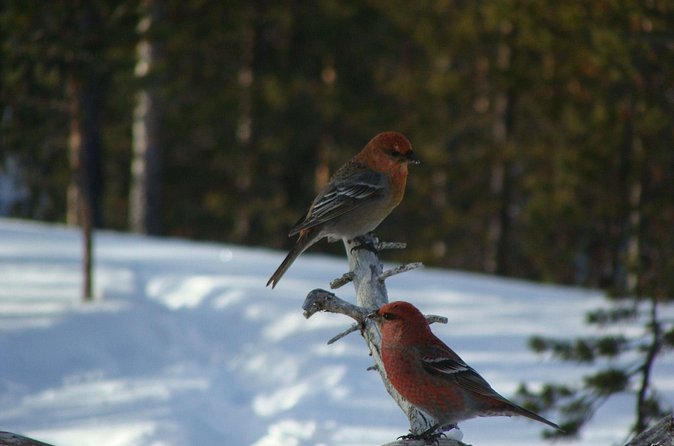
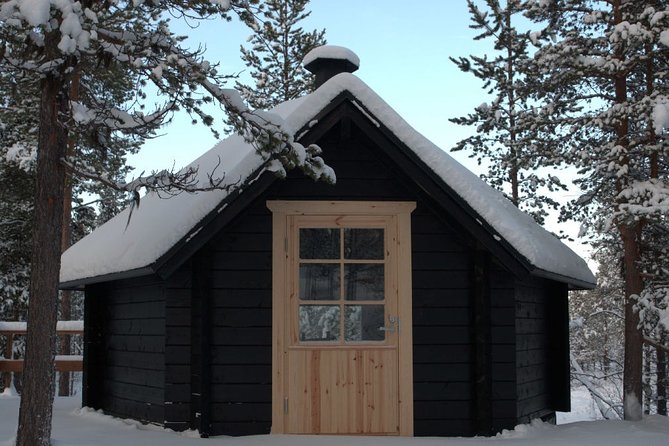
After the snowshoe walk, you return to a traditional kota, a small fire hut, for a hot drink and local snacks. This is more than a quick cup handed over at the end. The hut provides shelter, warmth, and a natural pause after time in the cold.
The food has included coffee or tea, a bun, homemade muffin, cheese and moose toasted snacks, and other local produce. Exact offerings can vary, so I would not book this expecting a fixed menu. You can expect a simple, regional refreshment rather than a full restaurant meal.
The open fire changes the feel of the afternoon. You have time to warm your hands, continue the conversation, and watch birds nearby. For many people, this will be the most memorable part because it brings together the forest, the hosts, and the practical side of northern life.
The kota is also a good reason to dress properly for the walk. The fire comes after the outdoor portion, not instead of it. Wear warm winter clothing and footwear suitable for snow, and remember that the activity remains outdoors for most of its duration.
Why the small group matters
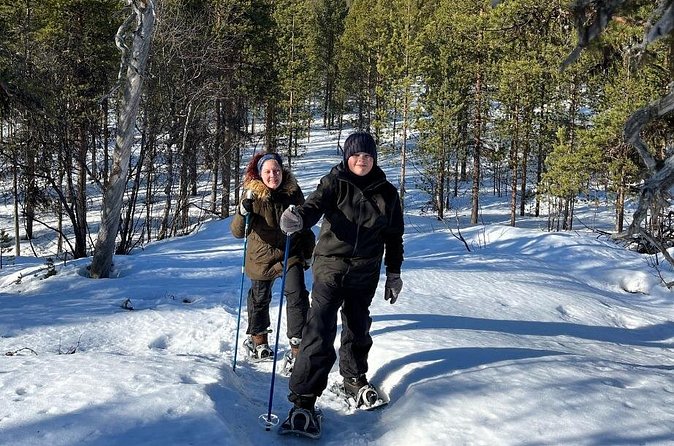
The maximum of six people is one of the clearest advantages here. A larger group would make it harder to hear explanations, stop for tracks, or ask about a bird without holding everyone up.
A small group also suits the subject. Nature interpretation works best when you can pause. You are not being moved from one photo stop to another. You can ask why a particular track looks different, how a bird behaves, or what a certain plant means in the local ecosystem.
This format is especially good for independent visitors who prefer local contact to a large commercial excursion. The hosts share their own connection to the woods and invite conversation around the fire. That personal scale is part of what you are paying for.
The tradeoff is that a small nature walk may feel too quiet if you want action, speed, or a long list of attractions. There is no promise of dramatic wildlife, a long route, or an athletic challenge. You get time, attention, and interpretation instead.
Is $114.02 a fair price?
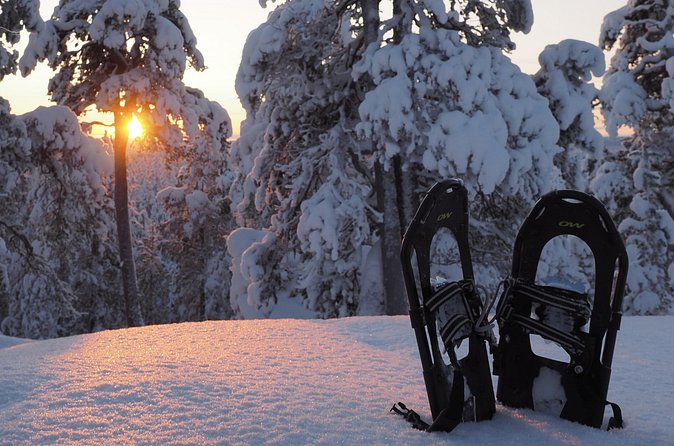
At $114.02 per person, this is not the cheapest way to spend a morning in Inari. The value depends on what you want from a Lapland outing.
You are paying for a roughly two-and-a-half-hour guided experience, snowshoe equipment and fitting as part of the walk, access to a private-feeling forest setting, and the attention of guides who explain the environment. The hot drink and local snacks add a useful finish, but the main value is the teaching and the small group.
For someone who could rent equipment and walk alone, the price may look high. Yet renting snowshoes will not give you the same ability to identify tracks, understand the woodland, or ask about Sami culture and local ecology. If you are interested in nature, that guidance is the point.
I would see the outing as good value for a first day in Lapland, especially if you want context for the rest of your holiday. It is less compelling if your only goal is to cover a lot of ground or find large animals.
The experience is commonly booked around 25 days ahead. That suggests you should reserve early if the date matters, especially since the group is limited to six people. The booking includes a mobile ticket and is offered in English.
Who will enjoy this most?
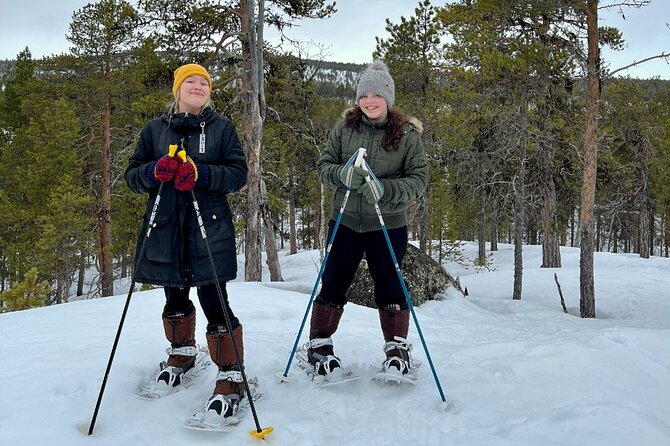
This walk suits adults and older children who enjoy asking questions and looking closely at natural details. An 11-year-old has taken part successfully, but the quiet pace may test the patience of a younger child. The right age depends on attention span as much as physical ability.
It is a good match for you if you want:
- A gentle introduction to snowshoeing
- Local guidance on trees, tracks, and birds
- A small group instead of a bus-sized outing
- A link between Finnish nature, daily life, and Sami culture
- A warm fire and regional snack after the walk
- An experience that can help you understand later time outdoors
It is less suitable if you need guaranteed animal sightings, a hard workout, or a full-day adventure. The route and wildlife depend on snow and weather, and the outing can be canceled if conditions are poor or the minimum number is not reached.
The activity requires good weather. If it is canceled for that reason, you are offered another date or a full refund. You can also cancel for a full refund up to 24 hours before the start time. Changes or cancellations made later are not accepted for a refund.
Practical details before you book
Meet at Terstontie 123 in Inari at 10:00 a.m. The experience returns to that same meeting point. The supplied details do not list hotel pickup as a standard feature, so arrange your morning around the stated meeting location.
Confirmation arrives when you book. The activity is offered in English, and service animals are allowed. Most people can participate, but you should be comfortable spending much of the outing outdoors in winter and walking on snowshoes.
The experience is not described as a private tour. With a maximum of six people, however, it remains personal enough for direct conversation. Ask about the likely route, clothing, or physical demands before booking if you have specific concerns, since winter conditions can change.
Should you book the AT Nature snowshoe walk?
I would book this if you want to understand Lapland rather than simply pass through it. Terhi and Arto offer more than equipment and a marked route. They connect the woods with wildlife, bushcraft, local culture, climate, and ordinary life in the Arctic.
The best reason to go is the combination of small-group nature guidance and the open-fire kota stop. The main caution is simple: wildlife is possible, not guaranteed, and the outing is short enough that you should not mistake it for a full wilderness expedition.
Choose this experience early in your Inari stay if you can. It can give you a useful eye for tracks, birds, trees, and snowy wetlands during everything else you do in Lapland.
FAQ
Where does the snowshoe walk start and end?
It starts at Terstontie 123, 99870 Inari, Finland, at 10:00 a.m. The activity ends back at the same meeting point.
How long does the experience last?
The snowshoe walk and related activities take approximately two hours and 30 minutes.
Who leads the experience?
The activity is provided by AT Nature and is run by Terhi and Arto. The walk may be guided by Terhi or Arto.
What wildlife might I see?
You might see Siberian Jays and Siberian Tits near feeding areas. With luck, you may also see elk or mountain hare. The guides begin looking for returning Pine Grosbeaks from mid-February or early March.
Is the activity suitable for children?
Most people can participate, and an 11-year-old has joined successfully. Very young children may find the quiet pace and nature discussion difficult, depending on their attention span.
What happens after the snowshoe walk?
You visit a kota, or traditional fire hut, for a hot drink and local snacks beside an open fire. The food may include items such as buns, muffins, cheese, or moose snacks.
What happens if the weather is poor?
The experience may be canceled in poor weather. You will then be offered a different date or a full refund. You can also cancel up to 24 hours before the start time for a full refund.
Just added around Lapland
- Winter Trek★ 5.0 · 3 reviews
- Arctic Fishing & Open Fire Cooking★ 5.0 · 5 reviews
- Private Snowshoeing Tour In Pyhätunturi With A Local Guide★ 5.0 · 3 reviews
- Premium Wilderness Skiing in Pyhä-Luosto National Park★ 5.0 · 4 reviews
- Reindeer Antler Workshop★ 5.0 · 7 reviews
- Snowmobile Safari in the Forest★ 4.5 · 3 reviews
- Premium Snowshoeing in Pyhä-Luosto National Park★ 4.5 · 6 reviews
- Ice fishing by car with hot beverages at Pyhä-Luosto★ 4.5 · 6 reviews
Snowshoeing & Winter Hikes, compared.
Pallas-Yllästunturi National Park Snowshoeing Tour
Read our review →
Arctic Reindeer Farm Experience with Snowshoeing in the Wild
Read our review →Browse the lists this tour appears in