
Reviewed · WALKING TOURS
Helsinki: Architecture Walking Tour with Expert
Helsinki’s best architecture tour is less about ticking off pretty buildings and more about learning why the city looks the way it does. In three hours, you move from Neoclassical Senate Square to Jugendstil, Nordic classicism, functionalism, and contemporary design, with guide Emek linking each style to Finnish life and politics. I like the small groups of up to six and the way the tour includes both famous landmarks and easy-to-miss interiors. I also like that the route reaches buildings by Engel, Saarinen, and Alvar Aalto rather than sticking to one era.
The main drawback is the walking. You cover about 3 to 4 miles, or 5 to 6 kilometers, so this is not a gentle standing tour. Helsinki weather can also be serious, especially in winter, although the guide has adjusted explanations indoors during very cold conditions.
Key details before you book
- A compact tour with broad architectural range: See Neoclassical, Gothic Revival, Art Nouveau, Jugendstil, Nordic classicism, modernism, functionalism, and contemporary work in central Helsinki.
- Guide Emek brings the buildings to life: His explanations connect architecture with Finnish history, society, politics, and everyday life.
- Small groups make a difference: The maximum group size is six, allowing the route to be tailored to the group’s interests and pace.
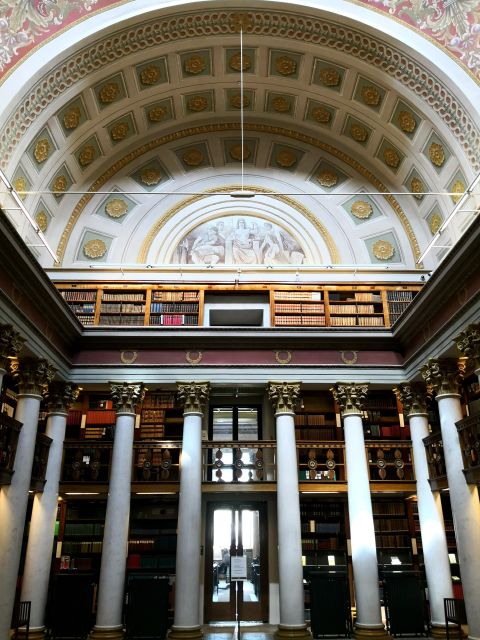
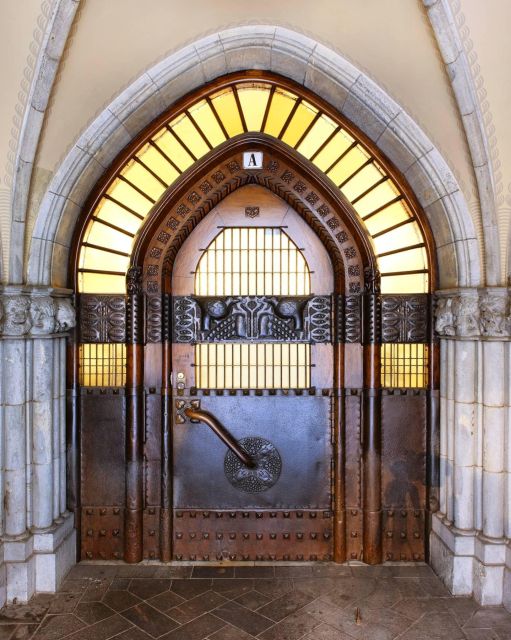
- Important interiors are part of the experience: The National Library, Central Railway Station, and other buildings may be visited from inside when conditions and access allow.
- A useful first-day activity: The tour gives you a framework for understanding Helsinki before you explore the city on your own.
- Plan for all-weather walking: Tours run year-round, rain or shine, so wear comfortable shoes and proper clothing.
Why Helsinki works so well for an architecture walk
Helsinki is unusually easy to read as a city. Its central streets hold buildings from several periods close together, so you can see Finland’s changing ambitions in a short walk.
The route moves through styles that are not just decoration. Neoclassical buildings reflect Helsinki’s role as a planned capital. Jugendstil shows a more national and expressive period. Functionalism strips buildings down to practical forms, while newer work such as Oodi reflects modern ideas about public space and civic life.
That is the useful part of this experience. You are not simply told that one building is older than another. You get a sense of how architecture responds to climate, politics, national identity, technology, and changing ideas about how people should use a city.
I would book this early in a Helsinki visit. After three hours with Emek, you will recognize details in buildings you might otherwise pass without noticing. The tour also gives you a better vocabulary for exploring places such as the central shopping streets, railway district, and harbor-side center.
More walking routes around Helsinki:
- A Finntastic Walking Tour in Helsinki
★ 5.0 · 700 reviews - Epic Helsinki: English Speaking Walking Tour
★ 4.9 · 192 reviews - Helsinki walking tour with a city planner
★ 5.0 · 175 reviews
Starting at Aleksanterinkatu and Kluuvikatu
The meeting point is at the corner of Aleksanterinkatu and Kluuvikatu, outside the Nanso Clothing Store at Aleksanterinkatu 9B. Your guide waits there, making the location fairly straightforward to find in central Helsinki.
From this point, you are already in a useful part of town for an architecture tour. The surrounding streets bring together commercial buildings, civic spaces, and historic structures. The route does not need a bus or other transport, which keeps the focus on the relationship between buildings and streets.
The group limit of six is one of the strongest practical features. A large group can make city walking awkward, especially when the guide is explaining a facade or pointing out a detail above street level. Here, you have a better chance to hear clearly and ask questions.
Emek also adapts the conversation to the people in the group. If you already know something about architecture, you can ask more specific questions. If you are new to the subject, the explanations remain connected to visible examples rather than turning into a lecture full of technical terms.
Senate Square and the Neoclassical capital
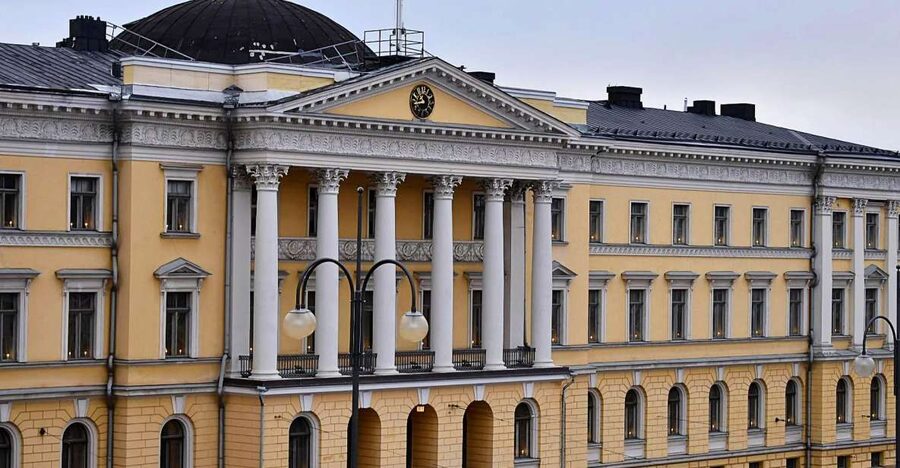
Senate Square is the natural place to understand Helsinki’s formal side. Its Neoclassical architecture presents a carefully ordered capital, with large public buildings arranged around an open square.
The National Library of Finland is one of the key stops. Its importance is not only visual. The library helps show how education, knowledge, and national identity became tied to the development of Finland.
This is also where the work of Carl Ludvig Engel comes into the story. Engel helped shape the central Helsinki that many people picture before arriving, with restrained forms, balanced facades, and a strong sense of civic order.
I find this part of the walk most useful when you pay attention to scale. The square is not simply a collection of attractive buildings. Its arrangement tells you that the city was being presented as a serious administrative and cultural center.
The tour can also include time inside major buildings. That matters because Helsinki’s architecture often reveals as much through interiors as through street facades. Instead of looking only at windows and columns, you may get a clearer sense of how the building was meant to function.
Central Railway Station and the Saarinen connection
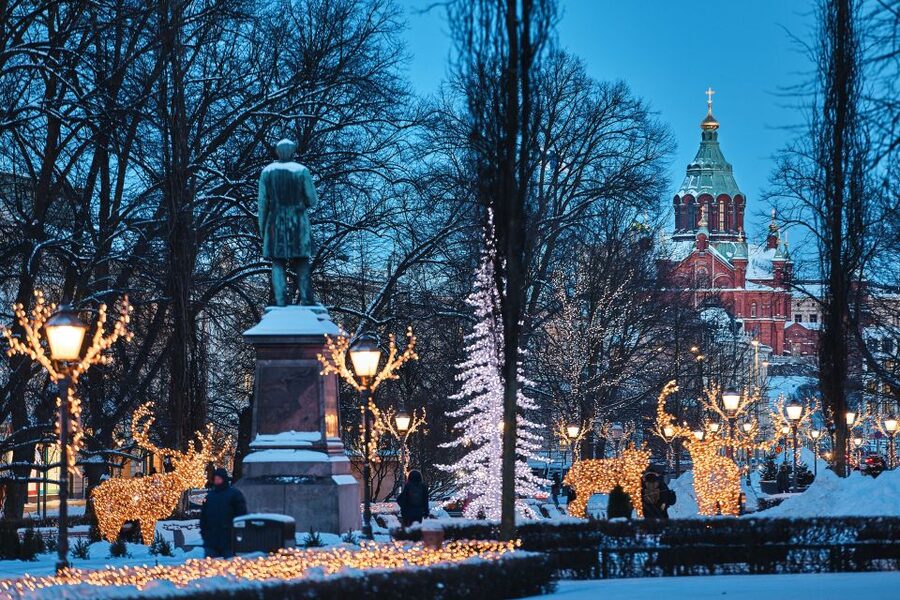
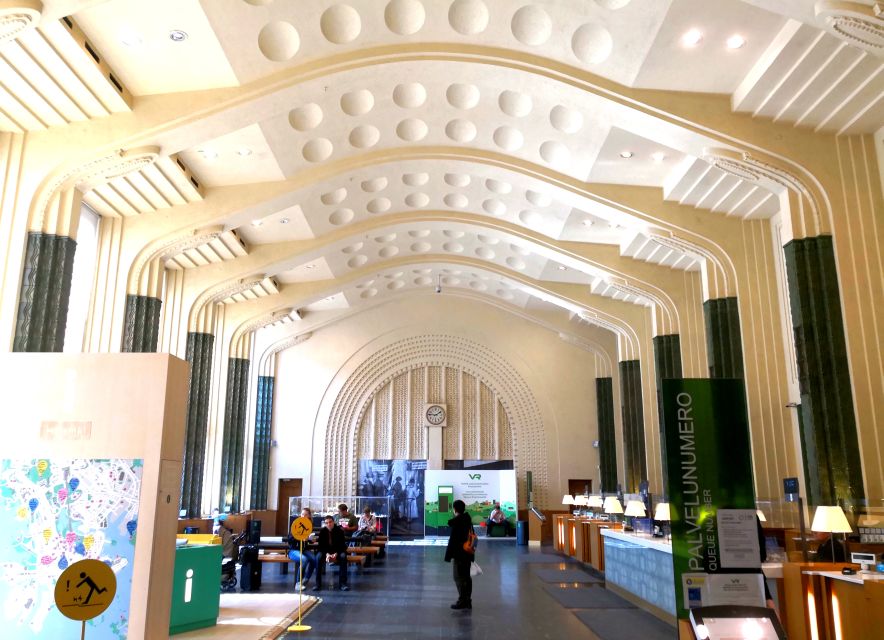
The Central Railway Station introduces a different Helsinki. Its architecture is more dramatic and expressive, with a design associated with Eliel Saarinen.
The station is still a working transport hub, so you see architecture in daily use rather than behind a museum barrier. That gives this stop a practical edge. People are moving through the building for ordinary reasons, while you are learning how its design communicates importance and movement.
Saarinen’s work helps explain the shift away from strict Neoclassicism. The station belongs to a period when Finnish architects were looking for a stronger national expression. The forms are more sculptural, and the building has a heavier, more memorable presence.
The contrast with Senate Square is one of the route’s best teaching moments. You do not need a long classroom explanation to see that Helsinki’s public image changed from orderly imperial capital to something more distinctly Finnish.
If you are taking photographs, the station gives you strong details to watch for, but keep your attention on the guide and the flow of the building. This is a busy public place, not a quiet viewing room.
Same base, a completely different day:
- Helsinki: Sightseeing Canal Cruise with Audio Commentary
★ 4.5 · 1,299 reviews - From Helsinki: Nuuksio National Park Half-Day Trip
★ 4.8 · 688 reviews - Helsinki: Tallinn Guided Day Tour with Ferry Crossing
★ 4.6 · 670 reviews - Helsinki: Hop-On Hop-Off City Bus Tour
★ 4.2 · 585 reviews
Jugendstil and the Pohjola Insurance Building
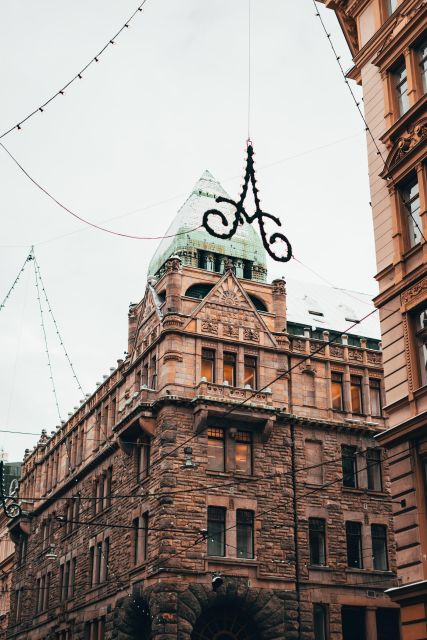
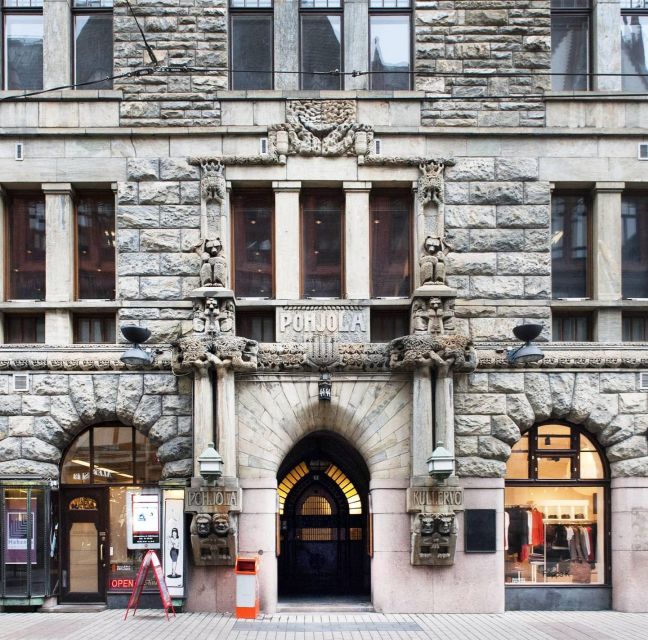
Helsinki is famous for its Jugendstil, the Finnish form of Art Nouveau, and the Pohjola Insurance Building is an important example. Its design is more imaginative and forceful than the formal architecture around Senate Square.
The building also shows how architecture can express national feeling. Instead of relying on the language of classical capitals and columns, Jugendstil designers used organic forms, local references, and heavier stonework to create a distinct Finnish character.
This is one of the places where Emek’s wider knowledge is valuable. The building is easier to understand when you connect its design to the period in which Finnish identity was being expressed through art, architecture, and public culture.
The tour also includes JugendHall, another stop that helps fill out the picture. Seeing more than one example keeps the style from becoming a single postcard image. You can compare how decorative ideas were used in different types of buildings and how they fit into the surrounding city.
Not every stop will appeal equally to every person. If you prefer clean modern lines, the decorative weight of Jugendstil may feel busy. Still, it is central to Helsinki’s character, and this tour gives you the context needed to understand why.
Academic Bookstore and the work of Alvar Aalto

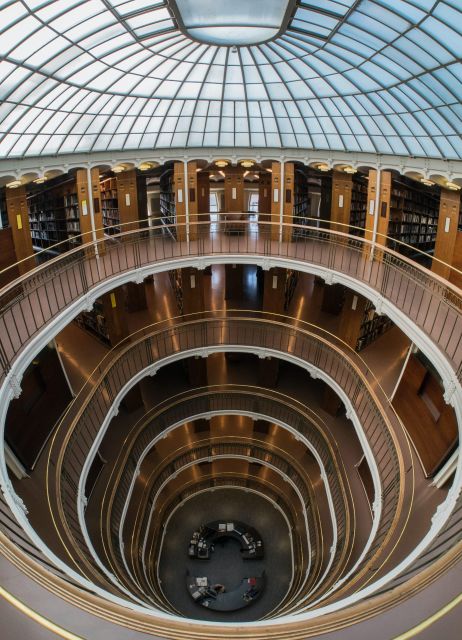
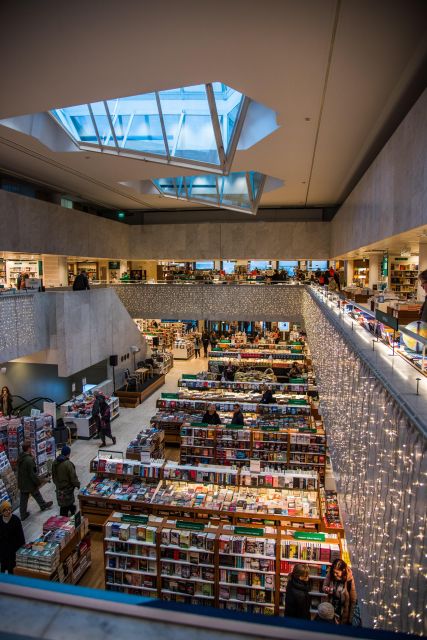
The Academic Bookstore is a major stop for anyone interested in Alvar Aalto. Aalto’s work brings a more human and functional approach to the route, with attention to light, materials, movement, and the experience of people inside a building.
This is where the tour moves beyond the idea that modern architecture has to be cold or severe. The bookstore is a working commercial space, yet its design has a clear sense of atmosphere and purpose.
Aalto is one of Finland’s best-known architects, so it would be easy to treat this stop as a quick name check. The better approach is to notice how the building serves its users. The tour explains the thinking behind the design, helping you see why the space looks and feels different from older Helsinki buildings.
The bookstore is especially useful for visitors who are not architecture specialists. You can understand its main ideas by watching how the interior is organized. You do not need to memorize architectural vocabulary to appreciate the relationship between light, levels, materials, and use.
Oodi and Helsinki’s contemporary public life
The new public library Oodi brings the tour into present-day Helsinki. It is not just a library in the traditional sense. Its inclusion shows how Finland thinks about public buildings as places for shared activities, access, and community life.
Oodi also gives you a clear contrast with the older buildings near Senate Square. The city’s architectural story does not stop with historic styles. Contemporary Helsinki continues to use design to express public values.
This stop is valuable because it puts the earlier buildings into perspective. You can compare a formal civic building, a railway station, a department store, and a modern library, then ask what each one says about the society that built it.
The precise balance between exterior viewing and interior access can vary, but Oodi is part of the advertised route. If you are especially interested in modern architecture, mention that early in the walk so Emek can give those sections the attention they deserve.
Architecture tied to Finnish life
The best part of this experience is the connection between buildings and people. Emek’s explanations cover Finnish history, architecture, art, politics, and daily life, rather than treating each building as an isolated object.
That wider frame came through especially strongly for past participants who wanted more than design labels. The tour explains how climate can affect architecture, how social changes shape public buildings, and how Finnish history appears in different architectural movements.
You also get a sense of how Finns use their city. A bookstore, station, library, insurance building, and civic square each serve a different purpose. Looking at them together shows how Helsinki has changed while keeping its compact center readable.
The tone is another reason this works for a broad audience. Emek has been described as personable, clear, and passionate, with a good command of English. The tour is informative without needing to become heavy, and the pace can be adjusted to the group.
Walking in summer, rain, and winter
Do not treat the walking requirement as a footnote. Three hours and up to 6 kilometers can feel easy in good weather, but the route is still a substantial city walk.
Wear comfortable shoes with enough support for pavement. Bring clothing suited to the forecast, and remember that the tours operate all year. Rain does not automatically cancel the experience.
Winter visitors need to take the conditions seriously. Helsinki can be very cold, and one tour participant joined at minus 20 degrees Celsius. Emek has also conducted more explanations indoors when the weather was especially harsh, which is helpful, but you should still dress warmly.
The weather can change the character of the experience. In summer, you may spend more time enjoying facades and public spaces. In winter, interiors and concise outdoor stops become more important. Either way, the architecture remains visible, but your comfort depends on preparation.
Is the $70 price good value?
At $70 per person, this is not the cheapest way to spend three hours in Helsinki. You can walk through Senate Square and view several central buildings without paying for a guide.
The value comes from interpretation, access, and focus. A guide can point out connections between buildings that are easy to miss, explain why a style developed, and help you understand what you are seeing inside and outside. With only six people, the experience is closer to a private conversation than a standard large-group walk.
I consider the price fair for architecture fans, first-time visitors, and anyone who likes history explained through places. It is less compelling if you mainly want fast sightseeing photographs or dislike walking in uncertain weather.
The package includes the expert guide, and the tour lasts three hours. You can reserve now and pay later, and cancellation is free up to 24 hours before the start. Those policies help if your Helsinki plans are still shifting, but the main value remains the quality of the explanation.
Who should book this Helsinki tour?
I would choose this tour if you enjoy architecture, urban history, design, or the way public spaces reflect national identity. It is also a good fit if you want an informed introduction to Helsinki before spending the rest of your visit exploring alone.
It suits solo visitors and couples especially well because the small group keeps the discussion open. Older walkers can also take part, but the 5 to 6 kilometer distance should be considered honestly. Comfortable shoes and weather-ready clothing are essential.
You do not need an architecture background. The route covers a wide range of periods, and the explanations connect each style to visible buildings and ordinary city life.
I would skip it if you want a short, low-effort orientation or if you are unwilling to walk outdoors in rain or cold. You should also know that the tour is in English only.
Should you book it?
Book this tour if you want Helsinki to make more sense, not just look attractive. The combination of Senate Square, the National Library, Central Railway Station, Jugendstil buildings, Academic Bookstore, and Oodi gives you a clear route through the city’s architectural development.
The strongest reason to book is Emek’s approach. He connects design with history, politics, climate, and Finnish life, then adjusts the conversation to the group. That makes the tour useful even if you know little about architecture.
For $70, you are paying for three focused hours, a very small group, and an expert guide who can turn a city walk into a practical lesson in how Helsinki was built. Bring good shoes, dress for the forecast, and book it near the start of your stay if you want the rest of the city to come into sharper focus.
FAQ
How long is the Helsinki Architecture Walking Tour?
The tour lasts three hours.
How far will I walk?
You should be prepared to walk approximately 3 to 4 miles, or 5 to 6 kilometers.
What language is the tour conducted in?
The live tour guide speaks English.
How large is the group?
The group is limited to six participants.
Who is the guide?
The guide is Emek, who leads the tour for Ataman Tours.
Where does the tour meet?
The meeting point is outside the Nanso Clothing Store at Aleksanterinkatu 9B, on the corner of Aleksanterinkatu and Kluuvikatu.
Which Helsinki buildings are included?
The route includes Senate Square, the National Library of Finland, Central Railway Station, Oodi public library, JugendHall, the Pohjola Insurance Building, Academic Bookstore, and other architectural sites.
Does the tour operate in winter and rainy weather?
Yes. Tours operate year-round, rain or shine. You should bring weather-appropriate clothing.
Can I cancel for a full refund?
Yes. You can cancel up to 24 hours in advance for a full refund.
Just added around Helsinki
- From Helsinki: Guided Tour of Porkkalanniemi Peninsula★ 5.0 · 22 reviews
- CITY Tour with Food Tasting in Helsinki★ 4.8 · 53 reviews
- The 1st Helsinki Free Tour – Since 2016★ 4.5 · 66 reviews
- From Helsinki: 3-Day Return Cruise to Stockholm & Breakfast★ 4.6 · 57 reviews
- Helsinki: 4D Flying Cinema Tour of Helsinki Tickets★ 4.3 · 52 reviews
- Helsinki Panorama Sightseeing Audio-Guided Bus Tour★ 4.0 · 72 reviews
- Helsinki: Bike or E-Bike Tour, BBQ, Sauna, Parks, and Forest★ 4.8 · 71 reviews
- Hop-On Hop-Off City Tour★ 3.5 · 73 reviews
Walking Tours, compared.



Ranua Zoo Entry Ticket w/ Walking Tour and Lunch
Read our review →
Small-Group Walking Tour with City Planner Guide
Read our review →

Browse the lists this tour appears in